Quick Answer
To increase sales in a restaurant in Mumbai, focus on improving local search visibility, running targeted promotions, attracting customers through social media, increasing online orders, and encouraging repeat visits. Track revenue, bookings, orders, and marketing costs to understand which strategies work. Restaurant owners in Mumbai, Navi Mumbai, and Thane should choose marketing activities based on their audience, location, budget, and business goals.
Why Is Your Restaurant Not Generating Consistent Sales?
Restaurant sales growth does not always require a bigger advertising budget. Sometimes, customers cannot find your restaurant online. In other cases, they discover you but do not place an order, book a table, or return.
The key is to identify where you are losing potential customers and address that problem first.
This guide explains how to increase restaurant sales in Mumbai, Navi Mumbai, and Thane through practical marketing strategies. Whether you run a restaurant, café, hotel, QSR, or cloud kitchen, you will learn how to attract customers, improve online visibility, encourage repeat business, and measure results.
1. Low restaurant footfall and limited local visibility
Imagine someone searching for a family restaurant in Vashi. If your Google Business Profile has outdated opening hours, poor photos, or no menu link, customers may choose another business.
2. Fewer online orders and table bookings
Customers may discover your restaurant but leave without ordering or booking. An outdated menu, unclear pricing, a broken booking link, or slow replies can create unnecessary barriers.
3. Difficulty attracting new customers
Posting on social media regularly does not guarantee new customers. Your content needs to reach the right audience and give people a reason to visit or order.
4. Low repeat visits
Getting a customer to visit once is only the beginning. Without a good experience, consistent service, or relevant reasons to return, you may struggle to build a loyal customer base.
Each problem requires a different solution. Understanding your biggest gap is the first step towards increasing restaurant revenue.
Which Marketing Channels Can Help Increase Restaurant Sales?
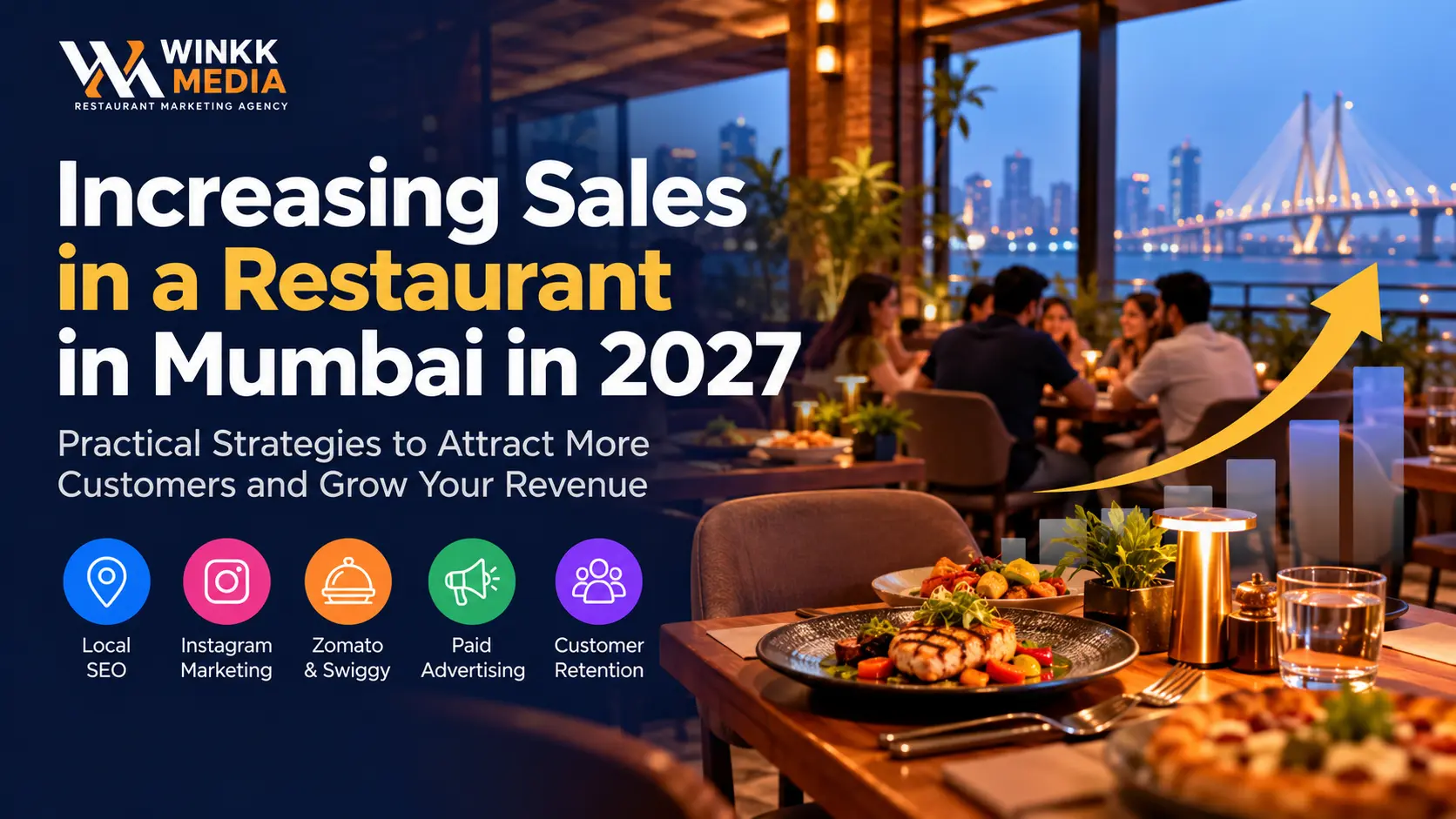
Local SEO, Instagram marketing, food delivery platforms like Zomato/Swiggy, paid advertising, and customer retention campaigns can all support restaurant sales. The best combination depends on your restaurant type, target audience, budget, and objectives.
1. Local SEO: Helps customers discover your restaurant when searching for nearby places. Start with an accurate Google Business Profile, updated hours, menu information, photos, and booking links. Google’s local ranking guidelines explain the role of relevance, distance, and prominence.
2. Instagram marketing: Helps showcase your food, ambience, offers, and customer experience through photos, Reels, and stories.
3. Zomato and Swiggy: Help restaurants reach customers looking for food delivery. Listing quality, menu descriptions, pricing, ratings, and suitable promotions can influence performance.
4. Paid advertising: Google Ads and Meta Ads can help promote launches, special offers, events, or delivery campaigns to relevant audiences.
5. Customer retention: Loyalty offers, permission-based WhatsApp messages, and feedback campaigns can encourage existing customers to return.
For example, a café in Bandra might prioritize Instagram content and local search, while a cloud kitchen may focus more on delivery listings, menu performance, and repeat orders.
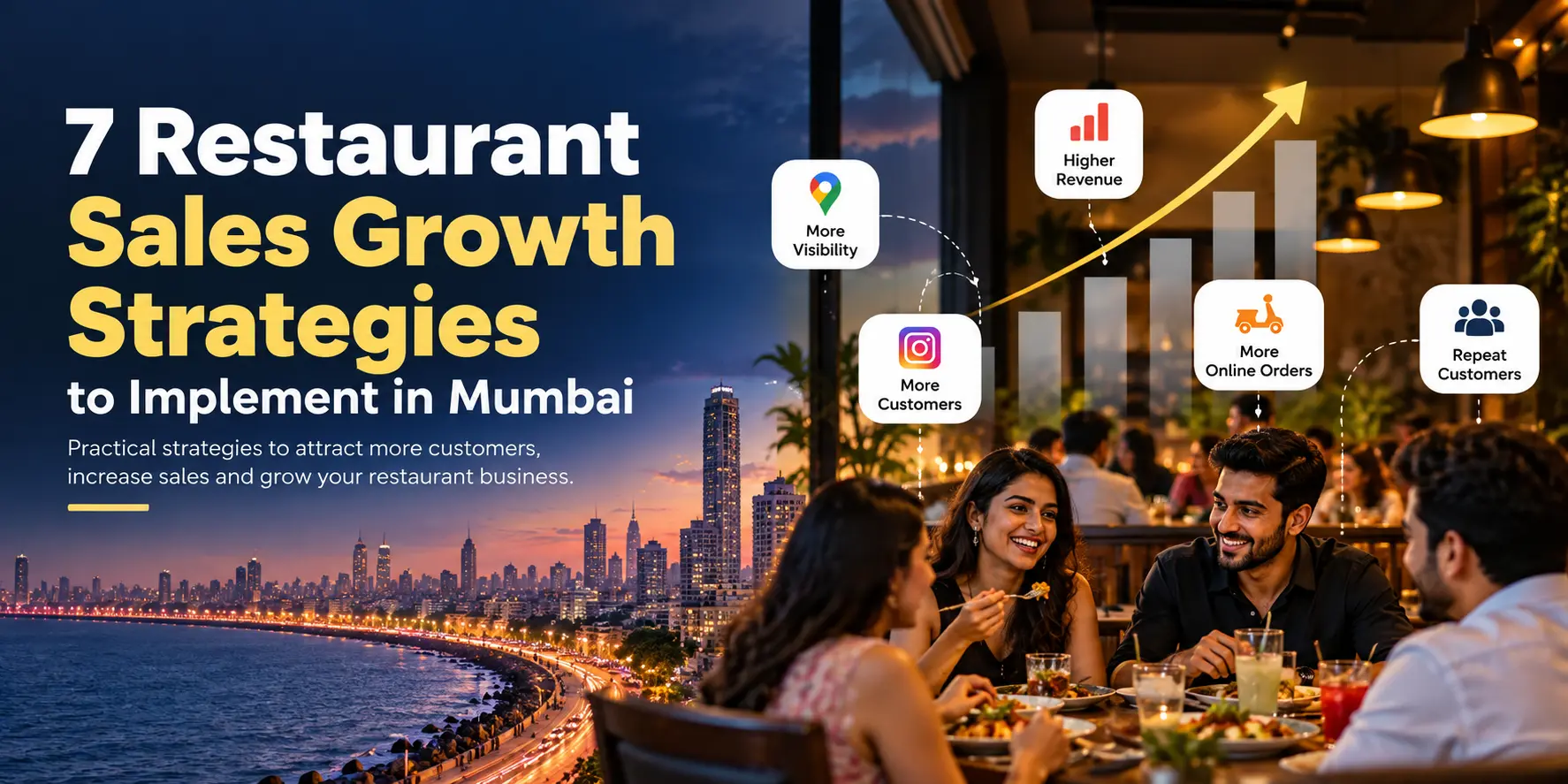
7 Restaurant Sales Growth Strategies to Implement in Mumbai
1. Improve Your Local Search Visibility
The problem: Nearby customers cannot find your restaurant or do not have enough information to choose it.
What to do:
- Keep your Google Business Profile accurate and complete.
- Add clear photos of your dishes, interiors, and menu.
- Update opening hours and contact details.
- Include working order and booking links where available.
- Respond professionally to customer reviews.
Whether your restaurant is in Mumbai, Thane, or Navi Mumbai, accurate business information helps potential customers discover your restaurant and decide whether to visit.
How to measure results: Track profile views, website clicks, calls, direction requests, and bookings where available.
If you need help improving your local visibility, read our guide to Ranking Higher On Google Maps.
2. Run Targeted Restaurant Promotions
The problem: Discounts generate orders but do not always increase profitable sales or encourage repeat visits.
What to do:
Create promotions around a clear business objective. For example:
- Offer weekday lunch combos to attract office workers.
- Promote a family meal during quieter weekend slots.
- Introduce a limited-time offer for a new menu item.
- Create a special package for group bookings or celebrations.
A restaurant in Lower Parel might test a weekday lunch offer, while a family restaurant in Kharghar could test a weekend dining package.
Avoid offering discounts without considering food costs, delivery commissions, and other expenses.
How to measure results: Track offer redemptions, sales during the promotion, average order value, and repeat purchases. Compare results with similar periods to understand whether the campaign helped.
3. Turn Social Media Engagement Into Customers
The problem: Your restaurant receives likes and views, but these interactions do not translate into visits or orders.
What to do:
- Showcase signature dishes and popular menu items.
- Use reels to show food preparation, ambience, or customer experiences.
- Include clear calls to action, such as viewing the menu or booking a table.
- Add accurate location information.
- Collaborate with relevant local food creators when the audience fits your target market.
- Reply promptly to genuine questions and booking enquiries.
For example, a café in Juhu could feature its signature desserts and ambience, while a QSR in Navi Mumbai could highlight meal combinations and ordering options.
How to measure results: Track profile visits, menu clicks, booking enquiries, website visits, and orders that can be attributed to social media.
If you need professional support, explore Winkk Media’s Social Media marketing and Influencer Marketing services.
4. Improve Your Food Delivery Marketing
The problem: Your restaurant receives fewer delivery orders than expected, even when customers are viewing your menu.
What to do:
- Use clear, accurate photos of your dishes.
- Write useful menu descriptions.
- Review pricing after accounting for platform commissions and food costs.
- Keep menu availability and preparation times accurate.
- Test one promotion at a time.
- Monitor customer feedback and resolve recurring service issues.
For a cloud kitchen serving regions, the delivery radius should reflect the areas the kitchen can serve reliably.
How to measure results: Track orders, average order value, conversion from menu views to orders where available, cancellations, ratings, and repeat orders.
Winkk Media offers Aggregator Management for businesses that need support managing their presence on food delivery platforms. You can also read our guide to Increasing Zomato and Swiggy Orders Without Spending More On Ads.
5. Encourage Repeat Visits and Orders
The problem: Customers visit once but rarely return.
What to do:
- Deliver a consistent customer experience.
- Ask customers for feedback and act on recurring concerns.
- Introduce a simple loyalty programme.
- Send relevant offers to customers who have agreed to receive marketing messages.
- Promote new dishes and seasonal menus to existing customers.
For example, a neighbourhood café could introduce a loyalty card, while a restaurant could send an occasional update about a new menu or special event through Whatsapp.
Avoid sending excessive messages. Give customers a clear way to stop receiving promotional communications. Consult with our experts at winkk media if you want to manage your PR and Reputation activities.
How to measure results: Track repeat purchase rate, loyalty programme participation, and the number of returning customers over a defined period.
Read our guide to Building Customer Loyalty Beyond The First Order.
6. Increase Table Bookings and Walk-In Visits
The problem: Your restaurant has empty tables during certain hours or receives fewer bookings than expected.
What to do:
- Make your booking details easy to find online.
- Add a working reservation link to relevant profiles and social media pages.
- Promote events, weekend brunches, or suitable off-peak offers.
- Use clear signage and menu displays outside your premises where permitted.
- Make it easy for customers to enquire about group bookings.
A lounge in Mumbai might promote a themed event, while a family restaurant in Thane could highlight weekend dining options.
Choose promotions that fit your audience and capacity rather than running discounts throughout the week.
How to measure results: Track reservations, walk-ins, table occupancy, covers served, and bookings by source. Asking customers how they discovered your restaurant can provide useful attribution data.
If you want to run Paid Ads for your restaurant, explore Winkk Media’s Performance Marketing services.
7. Measure Which Marketing Activities Generate Revenue
The problem: You spend money on marketing but cannot identify which activities produce orders, bookings, or profitable sales.
What to do:
- Marketing spend by channel.
- Website visits and enquiry submissions.
- Table bookings and online orders.
- Revenue attributed to campaigns where measurable.
- Average order value.
- Customer acquisition cost.
- Repeat purchases.
Use tagged campaign links to distinguish traffic sources. Google’s campaign URL guidance explains how parameters such as utm_source, utm_medium, and utm_campaign help identify campaign traffic in Google Analytics.
You can also use unique offer codes or ask customers how they heard about your restaurant.
How to measure results: Compare campaign costs with attributable revenue or profit. Remember that sales may have multiple contributing factors, so avoid attributing every purchase to the last marketing channel a customer used.
If your marketing data is spread across different platforms, professional reporting and campaign management may help you make better-informed decisions.
Want to Build a Restaurant Marketing Strategy for Your Business?
If you own a restaurant, café, hotel, or cloud kitchen in Mumbai, Navi Mumbai, or Thane, start by identifying your biggest growth challenge.
Contact Winkk Media to discuss your marketing goals and explore which strategies may suit your business.
How to Choose the Right Restaurant Marketing Strategy
Choose your strategy based on the problem you need to solve, not simply on which marketing channel is popular.
| Your main challenge | Where to start | What to consider next |
|---|---|---|
| Low restaurant footfall | Local SEO and accurate business listings | Targeted local promotions |
| Too few online orders | Menu quality and delivery listing improvements | Suitable offers and paid campaigns |
| Few repeat customers | Customer feedback and loyalty initiatives | Permission-based retention campaigns |
| Limited marketing budget | Google Business Profile and useful organic content | Paid campaigns once tracking is in place |
| Cannot measure results | Campaign tracking and a simple reporting sheet | More detailed analytics and optimisation |
Good restaurant marketing solutions should fit your business stage, budget, and objectives. A small café does not necessarily need the same marketing plan as a multi-outlet restaurant chain.
Start with a manageable number of activities, measure their performance, and expand when the results justify it.
How Winkk Media Approaches Restaurant Sales Problems in Mumbai, Navi Mumbai and Thane
At Winkk Media, we would look beyond likes, clicks and order counts. We’d investigate the customer journey, identify the likely cause of the problem, and build a plan around the business data.
Here are three examples of how Winkk Media’s approach could help restaurants in different parts of the Mumbai Metropolitan Region.
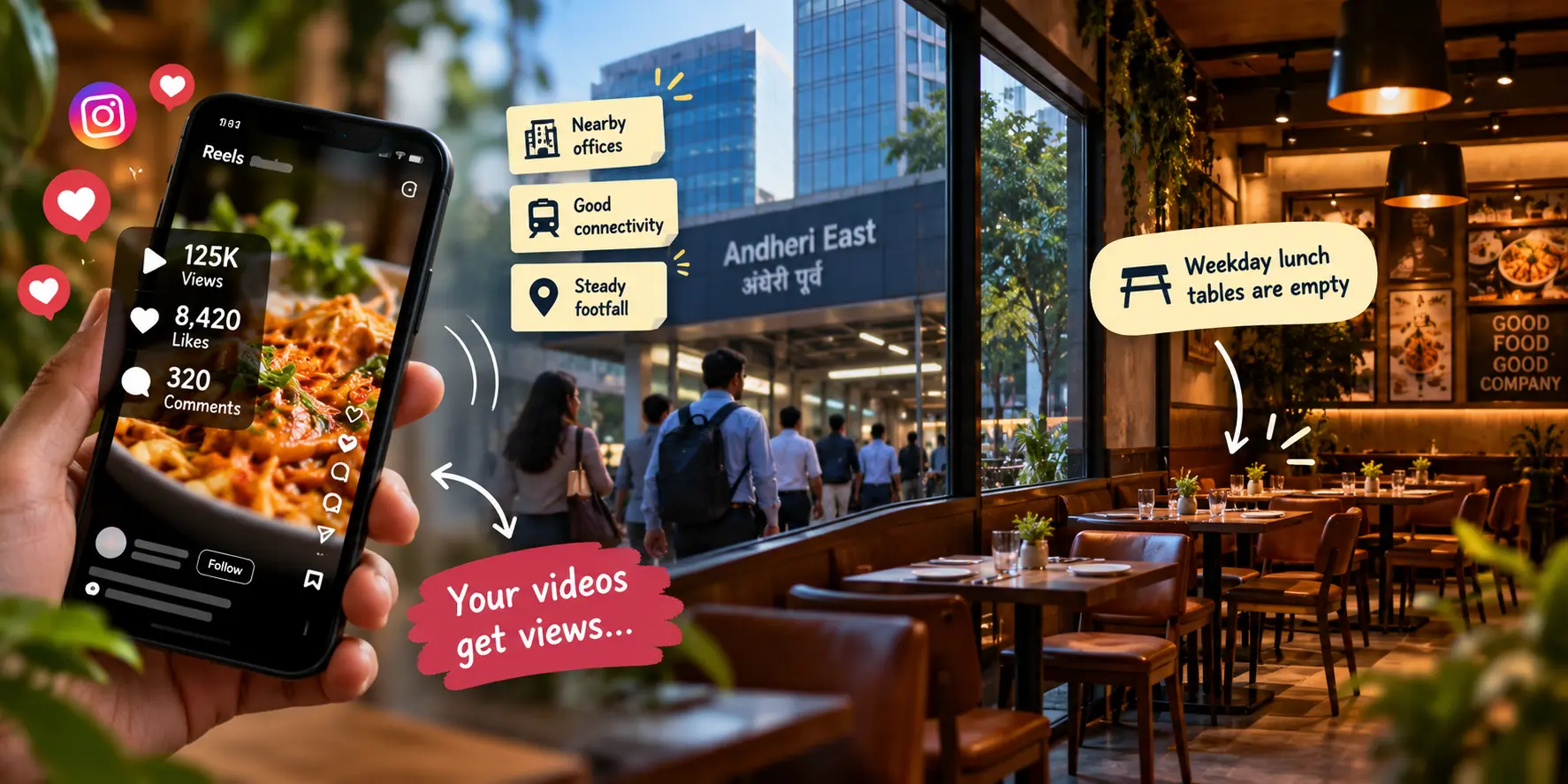
Mumbai: Your Andheri East Restaurant Gets Instagram Views, but Weekday Tables Are Empty
The situation
Imagine you run a casual dining restaurant in Andheri East, within reach of nearby offices and transport connections. Your weekends are reasonably busy, but weekday lunch tables remain empty. You regularly post food reels and spend money boosting them.
Your videos get views, but your weekday sales haven’t improved.
What could be causing the problem?
1. Your ads are optimised for engagement, not bookings.
- Your food videos attract people who enjoy watching food content, but that doesn’t mean they intend to visit your restaurant.
- Your targeting may reach people outside a realistic travel distance for a weekday lunch.
- Your creatives show attractive dishes but don’t communicate the weekday menu, price, location or reason to visit now.
- You may be paying for likes and video views without knowing whether anyone actually enquired or booked.
2. You’re not making it easy for nearby customers to choose you.
- An office-goer looking for lunch may need to compare the menu, prices, location and expected convenience quickly.
- If your Google Business Profile has incomplete menu details, outdated photos or incorrect hours, customers may move on to another restaurant.
- If your Instagram profile sends people to a generic homepage instead of a menu, call or reservation option, interested customers may drop off before contacting you.
What Winkk Media would do
- First, find the sales gap. Compare weekday lunch covers, average bill value and revenue with evenings and weekends. Identify which days and time slots have the most unused capacity.
- Audit your advertising. Check the campaign objective, audience location, spend, clicks and enquiries. Determine whether the ads are attracting nearby potential diners or mostly generating engagement.
- Study the local competition. Review restaurants appearing for relevant searches around the outlet. Compare their lunch menus, visible prices, photos, reviews and booking options to identify where your restaurant may be losing customers.
- Build a campaign for a specific occasion. If the data supports weekday lunch as the opportunity, create an ad showing the actual lunch menu, price and service hours. Target a realistic catchment area based on travel time and the restaurant’s existing customers, rather than targeting all of Mumbai.
- Shorten the path to a booking. Send interested customers directly to a suitable reservation option, WhatsApp enquiry or call. Update the Google Business Profile with accurate hours, menus and recent restaurant photos.
- Track what happens after the click. Use campaign tracking links and booking or enquiry records to connect marketing activity to confirmed visits.
How we’d know whether it’s working
We’d compare weekday bookings and covers, cost per confirmed booking, average bill value and additional revenue against a suitable baseline. We’d also check whether the extra sales justify the campaign cost.
The aim is to stop paying for attention that doesn’t translate into business and focus on activities that can bring more customers through the door.
Explore our social media marketing and performance marketing services.
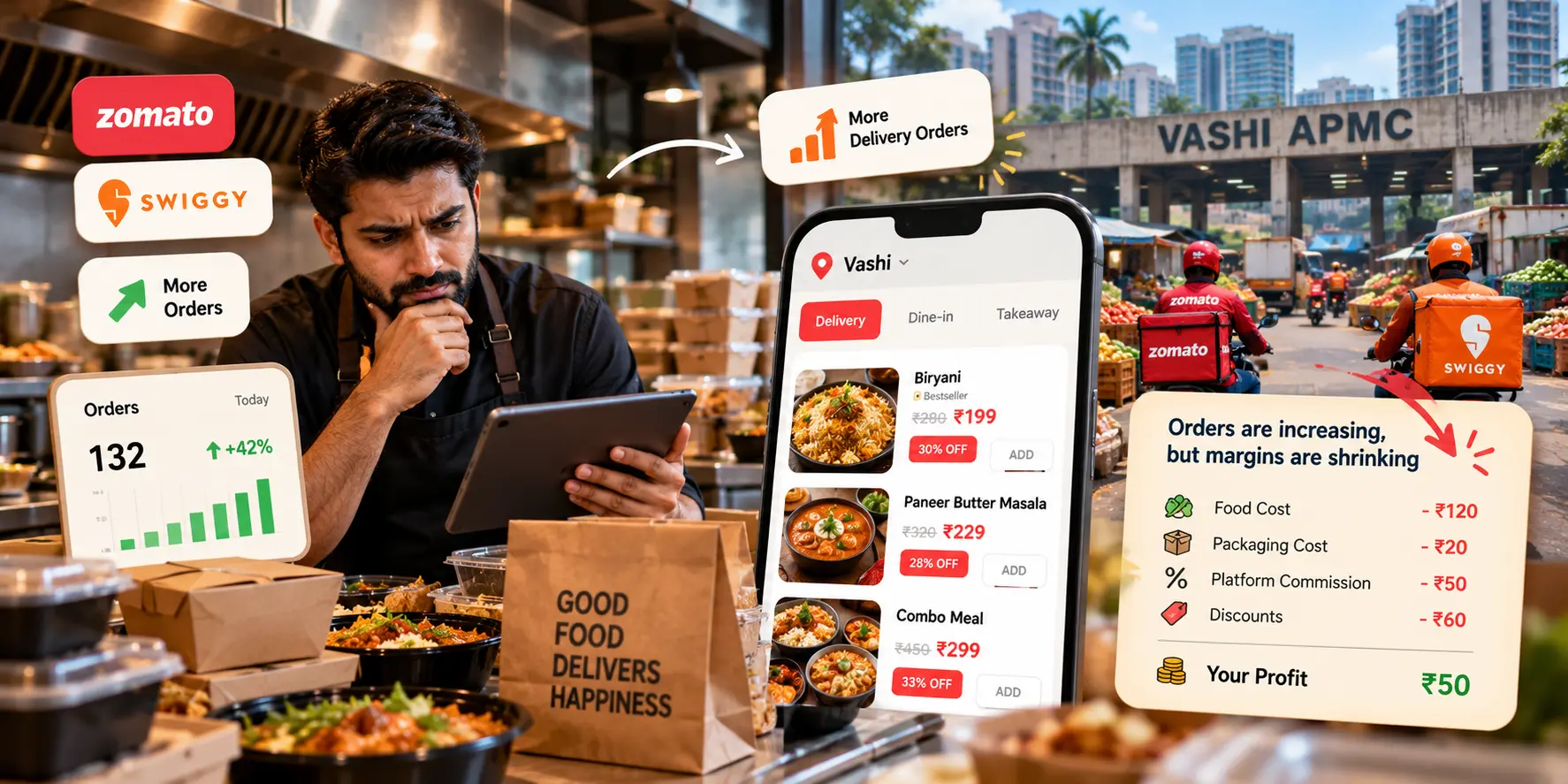
Navi Mumbai: Your Vashi Restaurant Gets Delivery Orders, but Discounts Are Eating Into Your Margins
Imagine you operate a delivery-focused restaurant in Vashi. Your orders increase when you offer discounts on a food delivery platform, but sales drop when the promotion ends.
You keep running offers because the order count looks encouraging. Yet, after food costs, packaging, platform charges and discounts, the amount your restaurant retains may be much lower than expected.
Vashi has a mix of offices, commercial areas and markets, including the Vashi APMC complex. Restaurants serving office workers may see different ordering patterns from those serving nearby residents. The best marketing strategy depends on who orders, where the orders come from, and when customers place them.
What could be causing the problem?
1. You’re discounting orders that may not need a discount.
- A blanket offer may reduce the amount you retain on dishes customers would have ordered anyway.
- High-volume dishes may have low margins once ingredient costs, packaging and platform charges are considered.
- Your order count may be increasing while the contribution from those orders stays low.
- Without comparing promotional and non-promotional periods, it is difficult to tell whether a discount is generating additional demand or simply reducing earnings on existing demand.
2. Your delivery menu may be missing opportunities to improve order value.
- Popular dishes may not have clear descriptions or appealing, accurate photographs.
- Customers may not notice suitable meal combinations, add-ons or drinks that complement their order.
- You may be promoting individual dishes instead of combinations that provide better value for the customer and better economics for the restaurant.
- You may not know which items encourage repeat orders because you focus mainly on total orders rather than item-level performance.
What Winkk Media would do
- Calculate what each order contributes: Using your available sales and cost records, we’d estimate what remains after food costs, packaging, restaurant-funded discounts and applicable platform charges. We’d separate the best-performing dishes from those generating sales but contributing little.
- Compare promotions properly :We’d examine order volume, average order value and estimated contribution during promotional and non-promotional periods. Where the data allows, we’d compare similar days and time slots to avoid mistaking normal demand for campaign impact.
- Find the right menu opportunities: We’d review item-level sales, photographs, descriptions, menu categories and customer feedback. We’d identify dishes that deserve better visibility and combinations that make commercial sense.
- Replace blanket discounts with targeted tests: If the numbers support it, we’d test a meal combination or offer for a particular ordering occasion instead of discounting the entire menu. We’d calculate the costs before choosing the offer.
- Improve the delivery listing: We’d make important menu information clearer, improve the presentation of priority dishes and check item availability, pricing and descriptions.
- Investigate repeat ordering: Where partner reports provide sufficient information, we’d look for signs of repeat demand and identify suitable opportunities to encourage customers to order again.
How we’d know whether it’s working
We’d track order volume, average order value, promotional cost, repeat orders where available, and estimated contribution after relevant costs. We’d also check whether a new offer attracts additional orders or simply shifts customers from full-price purchases to discounted ones.
The objective is not just to generate more orders. It’s to help the restaurant attract demand without relying unnecessarily on discounts that weaken its margins.
Explore our Aggregator Management service to manage your Zomato and Swiggy listings and optimise their performance.
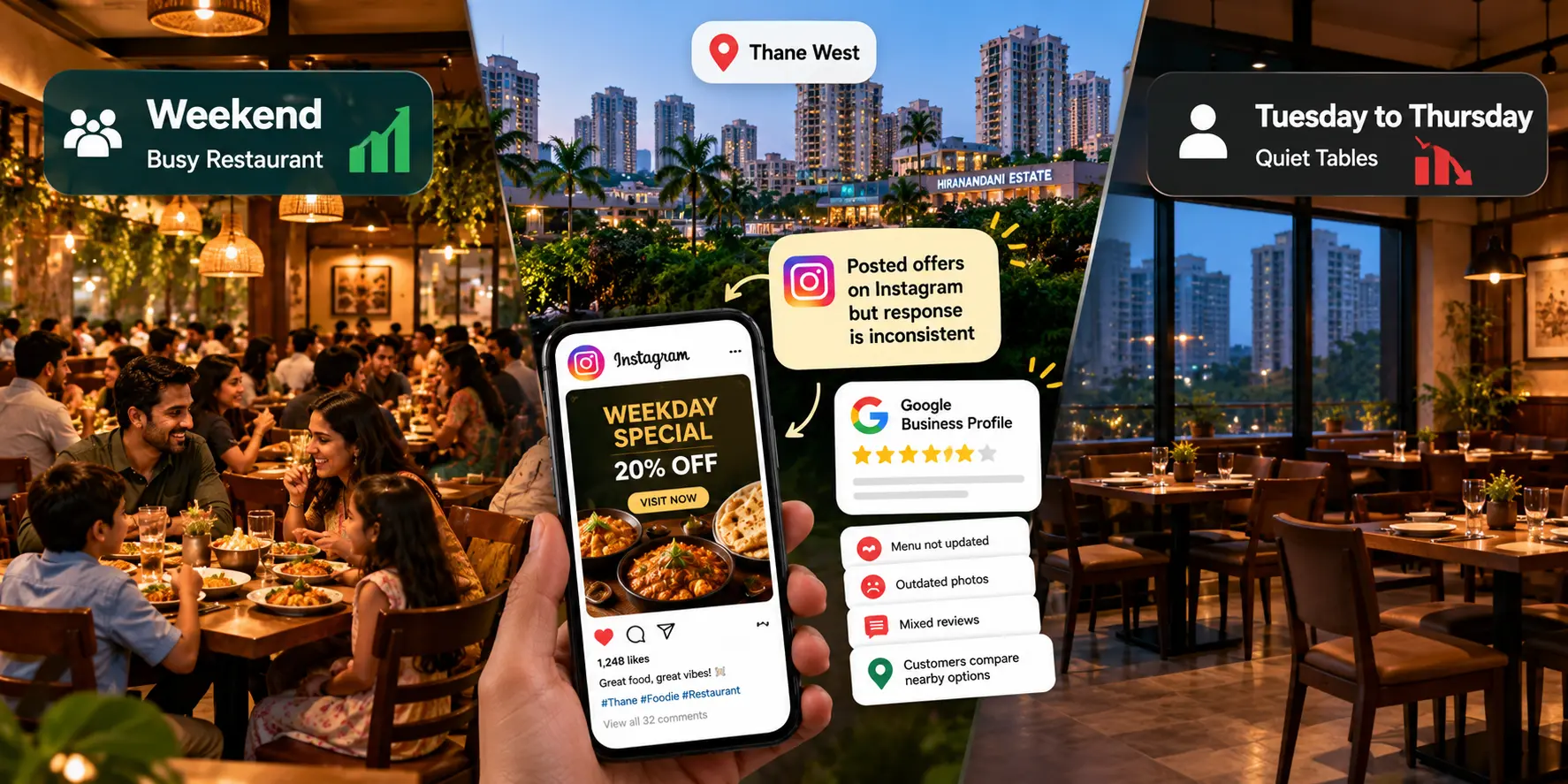
Thane: Your Restaurant Is Busy on Weekends but Struggles from Tuesday to Thursday
The situation
Imagine a family restaurant in Thane West, near a residential community and commercial facilities. Saturday and Sunday bring a reasonable number of diners, but weekday evenings are much quieter.
You’ve tried posting discounts on Instagram, but the response is inconsistent. You don’t know whether local customers aren’t discovering your restaurant, don’t see a compelling reason to visit during the week, or simply aren’t converting from your marketing.
Areas such as Hiranandani Estate illustrate how residential communities, schools, retail and commercial facilities can sit within the same broader area. That creates possible customer segments to investigate, but it doesn’t tell us which segment will generate sales for your particular restaurant.
What could be causing the problem?
1. Your offer may not give customers a reason to visit on weekdays
A general discount may not be enough to attract customers on quieter days.
Your regular customers may already visit on weekends. Offering them the same discount again may not bring in extra visits.
You may need to target a different audience or offer something that suits their needs. For example, a family meal deal may work for one restaurant, while a group dining offer may work better for another.
Also, if discounts reduce your profit too much, the extra bookings may not be worth it.
2. Nearby customers may not see a reason to choose your restaurant
Customers often compare menus, photos, ratings and reviews before choosing a restaurant.
If your Google Business Profile has outdated photos, an incorrect menu or missing details, customers may choose another restaurant.
Negative reviews can also discourage people if their concerns remain unanswered.
Without tracking where your bookings come from, you may keep running promotions without knowing which ones bring in customers.
What Winkk Media would do?
1. Find your slowest days and times.
We would compare daily sales, customer visits, average bill value and table usage to find when your restaurant needs more customers.
2. Understand your customers.
We would review booking records and customer feedback to understand who visits your restaurant and what they prefer.
3. Check your local visibility.
We would review your Google Business Profile, photos, menu, opening hours and reviews. We would also check how your restaurant compares with nearby competitors.
4. Create a suitable weekday offer.
If group dining looks promising, we might suggest a sharing menu or family meal package. The offer would depend on your customers and profit margins.
5. Promote the offer to the right audience.
We would use local social media campaigns and improve your visibility in relevant local searches. We would make the offer, timings, prices and booking details clear.
6. Track the results.
We would use booking links, enquiry records or offer codes, where possible, to understand how many customers the campaign brings in.
How would we measure success?
We would compare weekday bookings, customer visits, revenue, average bill value and promotion costs.
We would also check whether the offer brings in new visits or simply gives discounts to customers who would have visited anyway.
The goal is to build a weekday sales strategy based on your customers and profit margins, rather than repeatedly offering discounts without knowing what works.
Our Reputation and PR marketing services and other marketing services can help, depending on the problems we identify.
Which Metrics Should You Track to Measure Restaurant Sales Growth?
| Metric | What it tells you |
|---|---|
| Revenue | The sales generated during a defined period |
| Average order value | Average revenue per order |
| Restaurant footfall | How many people visit your premises |
| Table bookings | How many reservations your restaurant receives |
| Online orders | How many delivery or online orders you receive |
| Customer acquisition cost | The cost of acquiring a new customer, based on your chosen method |
| Repeat purchase rate | The share of customers who return to buy again |
| Marketing ROI | The return generated relative to marketing investment |
A simple way to calculate marketing ROI is:
Marketing ROI =
(Attributable return − marketing cost) / marketing cost × 100
When Should You Consider Professional Restaurant Marketing Solutions?
You may benefit from professional support when:
- You struggle to maintain your online presence.
- Your restaurant is difficult to find in local search results.
- Marketing campaigns generate engagement but few orders or bookings.
- You cannot connect campaign spending to business results.
- You need to coordinate several marketing channels.
- You lack the time or expertise to manage marketing consistently.
Winkk Media is a restaurant marketing agency in Mumbai serving businesses across Mumbai, Navi Mumbai, and Thane.
Want to discuss your restaurant’s growth goals? Contact Winkk Media to explore a marketing strategy suited to your business.
Frequently Asked Questions
1. How can I increase sales in a restaurant in Mumbai?
Start by identifying your biggest sales challenge. Improve local search visibility if customers cannot find you, improve your ordering and booking experience if enquiries do not convert, and introduce suitable retention campaigns if customers rarely return.
2. What are the most effective restaurant sales growth strategies?
Useful strategies include local SEO, targeted promotions, social media marketing, delivery listing improvements, repeat-customer campaigns, and performance tracking. Choose according to your restaurant’s goals, audience, and budget.
3. How can I attract more customers to my restaurant?
Make your restaurant easy to discover online, showcase your menu and customer experience, and give people a relevant reason to visit. Local search, social media content, and targeted promotions can all help.
4. How can local SEO help a restaurant attract customers?
Local SEO helps potential customers discover your restaurant when searching for nearby dining options. Accurate business information, suitable categories, useful photos, and genuine customer reviews help people evaluate your business.
5. How can I increase online orders for my restaurant?
Improve menu photos and descriptions, review pricing, keep availability accurate, and monitor customer feedback. Test promotions individually and track orders to identify which changes help.
6. How do I measure the ROI of restaurant marketing?
Compare the return attributable to your marketing activity with its cost. Use campaign tracking, offer codes, booking-source questions, and sales data to understand which activities contribute to business results.
7. Which marketing solutions are suitable for restaurants in Mumbai?
The right solution depends on the business. Dine-in restaurants may prioritize local SEO and table bookings, while delivery-focused businesses may need aggregator management. Cafés and lounges may also benefit from social media and relevant influencer campaigns.