
How to price your menu on Zomato and Swiggy without killing your margins or losing customers
Like many other restaurant owners you too have fallen in the menu pricing trap on aggregator platform? You too have listed Zomato and Swiggy with the same menu and the same prices they run in-house? And are now wondering why the platform feels more like a liability than a revenue channel.
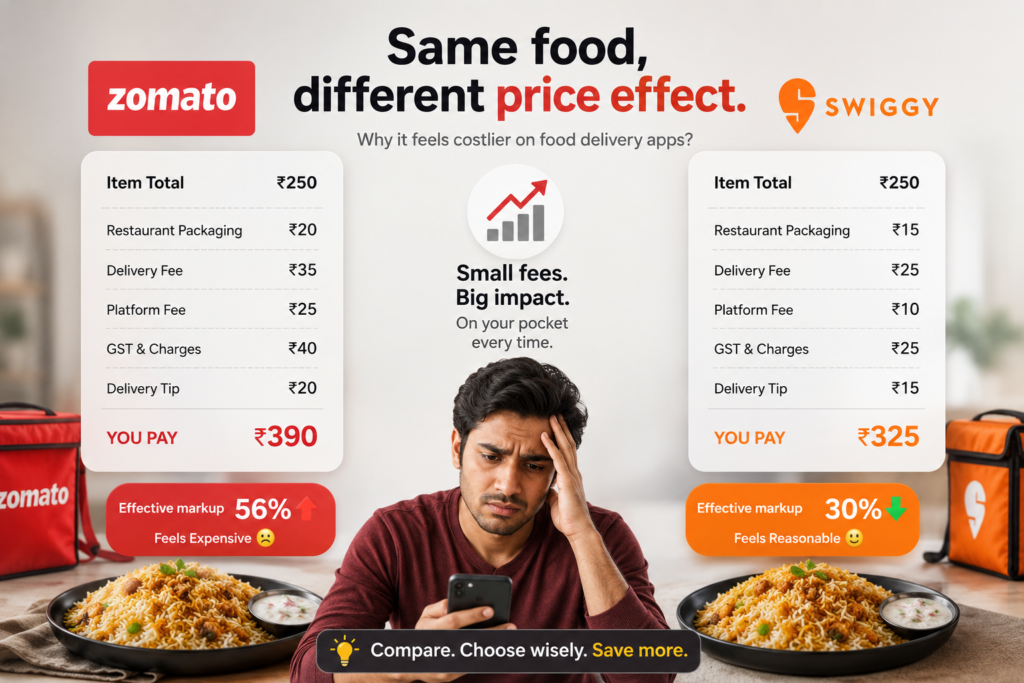
Here’s what nobody told you when you onboarded the aggregator platforms, they are not just a sales channel but also a cost centre. If your pricing strategy doesn’t account for then you end up paying for your customers’ orders too.
Don’t panic! A few smart and deliberate decisions can make your menu work for your margins without pushing your customers away.
1. Your aggregator menu needs a different price list
The most important thing any restaurant owner willing to onboard Zomato or Swiggy needs to is that they charge a commission of about 30% for every order. The solution to this issue is to increase your menu prices by a margin of 30–35% before listing on any aggregator platform. Online ordering comes with a convenience premium that customers expect to pay. Build your aggregator pricing from day one and your margins stay exactly where they should be
2. Online payments come with an invisible cost
Here’s something most restaurant owners don’t realise when a customer pays online rather than cash on delivery, the payment gateway takes an additional 1–2% cut on top of the platform commission. Although it’s a small percentage it adds up significantly at volume. Remember your aggregator menu price should incorporate both the platform commission and the payment gateway charge
3. Order of your menu is a marketing decision
How you arrange your menu directly affects what customers order on Zomato and Swiggy. A well-structured aggregator menu follows a logical flow – snacks first, followed by starters, then South Indian or regional specialities then comes the main course and finally accompaniments. This sequencing naturally draws attention to your higher-margin and higher-demand dishes
4. Keep low-margin items off the top
Tea,coffee,desserts – these items should not have their place on the menu at the top. Why? Because these are the categories where customers know they can get the same food item at cheaper cost in their local area. Let your authentic food do the talking first. Once a customer becomes a regular buyer then build desire for the add-ons.
5. Your recommended items are your prime section
Use your recommended sections on both Zomato and Swiggy to highlight the best selling, best-reviewed and most visually compelling dishes.
A customer visiting your profile should immediately see irresistible, well-photographed dishes with detailed descriptions. Considerthe recommended section as your storefront window so dress it wisely.
How Can Winkk Help Here!
Winkk specialises in getting your aggregator pricing and menu structure right. From restructuring your menu and pricing strategy to managing your aggregator presence completely across various platforms we ensure every order you receive works for your business and not against it.